NECK FAN BUYER GUIDE
How should neck fans be cleaned, maintained, and stored?
Neck fans are not interchangeable. Importers and retailers need a buyer guide that connects customer requirements, product application, evidence and shipment readiness. This article answers: How should neck fans be cleaned, maintained, and stored?
IN THIS ARTICLE
Introduction
ChillNexa recommends documenting the decision before samples are approved. That means linking the intended user, product specification, factory testing, packaging, instruction content and pre-shipment inspection to one controlled revision.
Direct answer
Clean, maintain and store neck fans according to the model-specific instructions, with attention to air-outlet dust removal, hair and lint checks, charging-port care and dry storage without crushing the neckband. Clear care guidance protects the product, supports safe use and helps reduce avoidable returns.
Start with the intended user and setting
Maintenance content should describe the actual product design, not a generic routine. Buyers should confirm what the user can remove, how water-contact parts are handled where relevant, whether the product must be disconnected before cleaning and how it should be dried before storage.
Write the use case as a testable brief: who will use the product, where, for how long, at what distance, and with what access to power or cleaning. This turns a general sourcing request into a comparable shortlist and gives the supplier a stable reference for sampling.
Buyer evaluation checklist
Review access to guards, vents, tanks, pads or filters where fitted. Confirm cleaning tools, warnings, drying steps, replacement parts and storage conditions. Product images and instructions should show the same configuration that the customer receives.
| Review area | Questions to answer before approval | Evidence to retain |
|---|---|---|
| Product role | What user problem and setting does the product serve? | Buyer brief and product positioning |
| Product revision | Which model, color, accessories and packaging are included? | Dated specification and approved sample photos |
| Performance | Which mode, distance and conditions support the claim? | Defined test method and result record |
| Market readiness | Which labels, instructions and records apply? | Final artwork and document register |
| Supply control | What must be checked before shipment? | Inspection plan and corrective-action record |
How to evaluate samples without creating avoidable risk
Ask the supplier to identify the sample revision in writing. Evaluate the product in the way a customer will actually use it: unpack it, check the supplied accessories, operate each mode, follow the proposed charging, refilling or cleaning steps where relevant, and compare the result with the intended application. A sample can be attractive while still being the wrong choice for the planned channel.
For a commercial comparison, keep the quotation, sample notes and claimed specifications in one file. If any material, motor, battery, PCB, water-contact component, accessory or packaging item changes, assess whether the original test evidence and product copy still apply.
Factory testing and shipment inspection
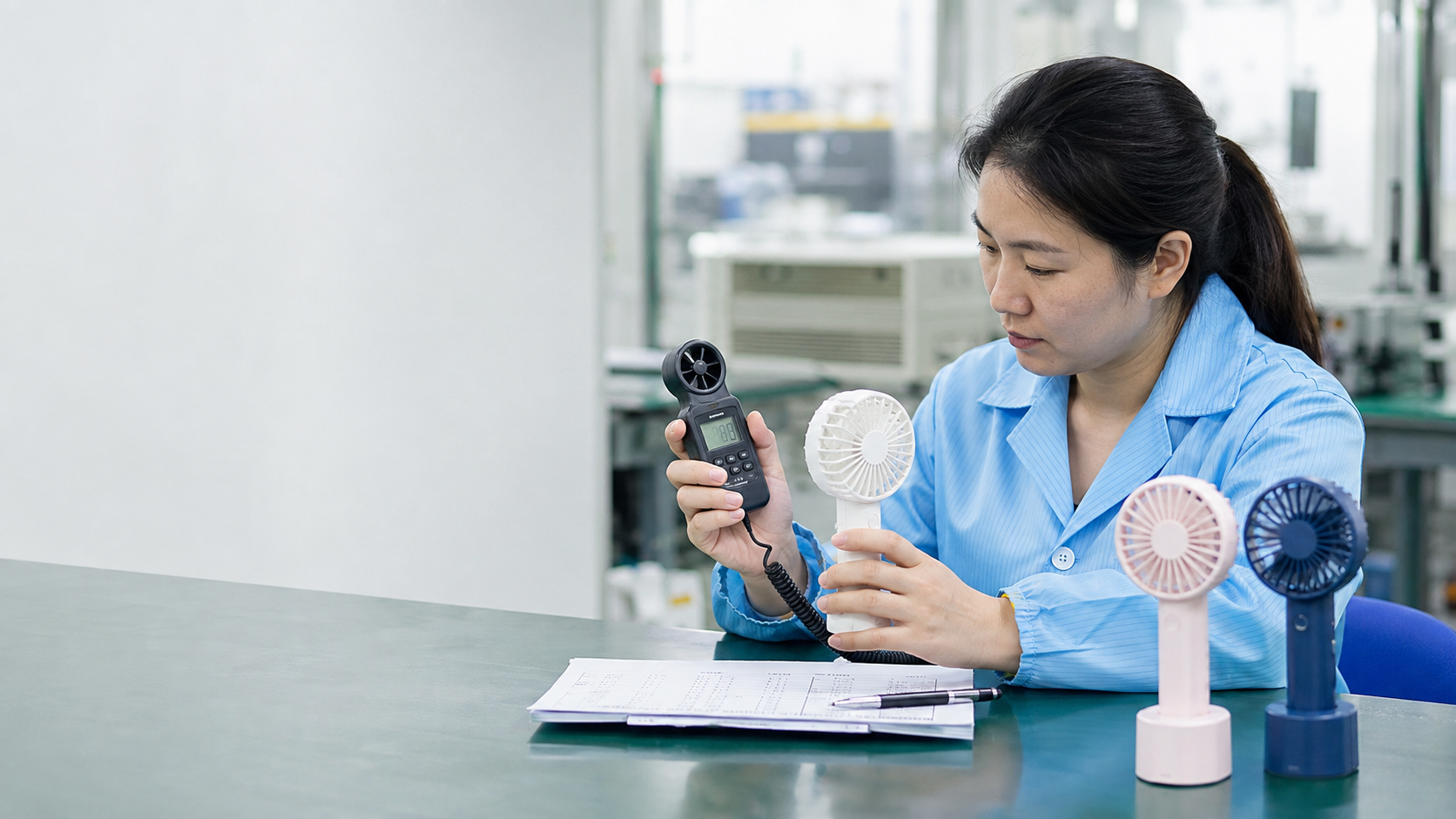
During sample approval, perform the proposed cleaning routine and check for difficult access points. Shipment inspection should verify neck fit, outlet direction, noise close to the user, speed control, charging, runtime, cosmetic condition, instructions and carton marks and that the correct care leaflet is packed with the production-intent product.
A practical shipment inspection covers cosmetic condition, function, accessory count, product labeling, instruction version, inner pack and master-carton information. It should also check random production units under the same operating conditions used for the approved claim. Inspection is a release-control step, not a substitute for earlier sample approval.
Get a product shortlist for your market
Questions buyers often ask
Can neck fans be stored immediately after use?
They should be cleaned and dried as the instructions require. For products with water-contact parts, storing residual water can create odor or hygiene issues; for battery products, avoid heat and physical damage.
What should be recorded during factory testing?
Record the exact model and sample revision, test method, operating mode, input power or battery state where relevant, observed result, date and reviewer. Photos or video can help clarify the setup, but the written acceptance criterion remains essential.
When should the shipment inspection be scheduled?
Schedule it when the production-intent quantity, accessories and final packaging are available to inspect and before the goods are released for shipment. Confirm the timing and sample plan with the factory or inspection partner in advance.
Which records are most helpful after launch?
Keep the approved specification, sample images, quotation, packaging artwork, instructions, relevant test evidence, factory testing record, inspection report and shipping documents. Together they support customer service, reorder decisions and controlled changes.
Conclusion
How should neck fans be cleaned, maintained, and stored? is best treated as a structured sourcing decision, not a feature comparison alone. When application fit, performance evidence, factory testing, packaging and shipment inspection are aligned, importers can make clearer customer promises and build a more dependable seasonal program.
EXTERNAL RESOURCES
Official references
Use these primary resources alongside the final product specification and destination-market requirements.